A Capability Formation
advisory firm.
The Density Group helps organizations redesign the conditions through which capability forms, compounds, and remains available when it matters most. The firm was established by Temidayo Afonja, creator of Capability Formation and Organizational Capability Architect.
The Density Group is a founder-led advisory firm. Temidayo Afonja leads every engagement and adds specialist collaborators when the decision requires additional expertise.
How the firm works.
Evidence before prescription
Every engagement begins with a reading of what the work is actually forming. Recommendations follow the evidence rather than arriving ahead of it.
Senior attention throughout
Engagements are led directly by the founder. Specialist collaborators are engaged only when an assignment requires additional expertise or delivery capacity.
Organizational reading, not organizational opinion
The work is not limited to sentiment. It examines documented decisions, role dependencies, evidence of judgment, capability transfer, and the organizational conditions under which work is performed.
Architecture that outlasts the engagement
The aim is structural. Changes are designed to hold in work design, internal mobility, succession, and knowledge transfer after the engagement closes.
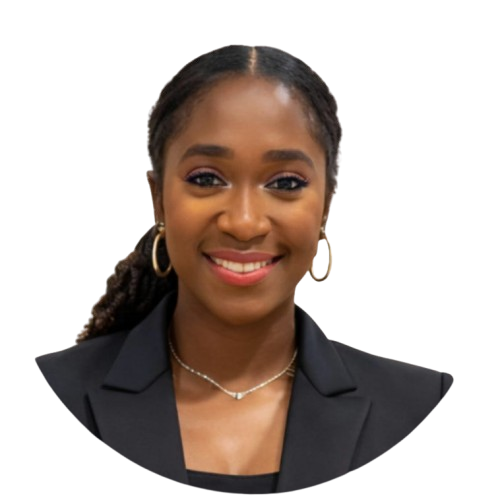
Temidayo Afonja is the creator of Capability Formation and the founder of The Density Group. She designs how organizations build capability that outlasts the conditions that created them.
Across nearly two decades she has led enterprise work spanning Employee Experience, Organizational Effectiveness, Talent, Leadership, DEI, and People Strategy. That work has run through Big Four consulting at Deloitte, EY, and PwC, a global life sciences organization operating under regulatory oversight, and enterprise technology. Her most recent operating role was Senior Director of Employee Experience and Belonging at a martech SaaS company.
She began in tax and financial analysis, moved into IT Audit and federal governance work, then through cybersecurity workforce strategy before the field had its current name, and spent over a decade inside the most demanding consulting environments in professional services. At every stop the same pattern surfaced. Organizations were losing their most critical capability quietly, and the people most at risk of being overlooked were often carrying the most organizational knowledge.
Building inclusion infrastructure at scale, as the first person appointed to do so at two separate global organizations, gave her a structural view of how capability compounds for some people and erodes for others. That body of work converged into Capability Formation. The framework reads Density and Optionality together through the Four States, with Alumni Capital as a separate organizational reachability reading. It is now the foundation of the firm’s advisory practice.
She holds an M.S. in Cybersecurity Risk and Strategy from New York University, completed with honors while working full time. She is the author of The Capability Audit, published in June 2026, and writes weekly at temidayoafonja.substack.com.
The path that built the framework.
Tax, financial analysis, oil and gas, and a Deloitte leadership internship. Completed an M.S. in Management Information Systems.
Deloitte, EY, and PwC, with an interim leadership role at Enaxis Consulting in between. IT Audit, a federal governance engagement, privacy and cybersecurity workforce strategy, and DEI advisory across Fortune 50 clients, culminating in national scale workforce governance work across 30,000+ employees.
Brought in to build what did not yet exist: an enterprise capability and inclusion function for 6,000+ employees globally, reporting directly to the COO. This period moved the emerging framework from instinct to architecture.
Appointed the organization’s first global DEI leader, with scope expanding to the full Employee Experience and Belonging function as the work outgrew its original mandate. Most recent role: Senior Director of Employee Experience and Belonging. Capability Formation was developed here.
Founded The Density Group to develop and apply Capability Formation through organizational diagnostics, executive advisory, research, and education. Published The Capability Audit in June 2026.